
Recipe
KIMCHI 101
You can kimchi anything!
(... as long as it's legal & edible)
Written by Doobydobap
Kimchi 101

Kimchi 101
When people think of kimchi, they often imagine a long, complicated process passed down through generations—but the truth is, kimchi isn’t hard. It’s more about understanding a technique than following a rigid recipe. Think of kimchi as a verb, much like pickling: a process rather than a single dish.
At its core, kimchi falls into two broad categories: fermented (the kind that develops its tang and funk over time) and fresh (bright, crisp, and meant to be eaten right away). Within those categories, there are countless variations, from napa cabbage classics to refreshing cucumber and even water-based kimchi.
In this post, we’ll break down the main types of kimchi and share a quick and easy master kimchi sauce you can adapt to make your own version at home. Once you grasp the basics, you can kimchi anything!
Quick & Easy "Master" Kimchi Seasoning
(General Base for various Kimchi types)
Ingredients:
- 1 1/2 cups gochugaru (Korean chili powder)
- 2/3 cup anchovy fish sauce
- 3 Tbsp saeu-jeot (salted fermented shrimp), minced
- 2 Tbsp minced garlic
- 3 Tbsp sugar


- Directions:
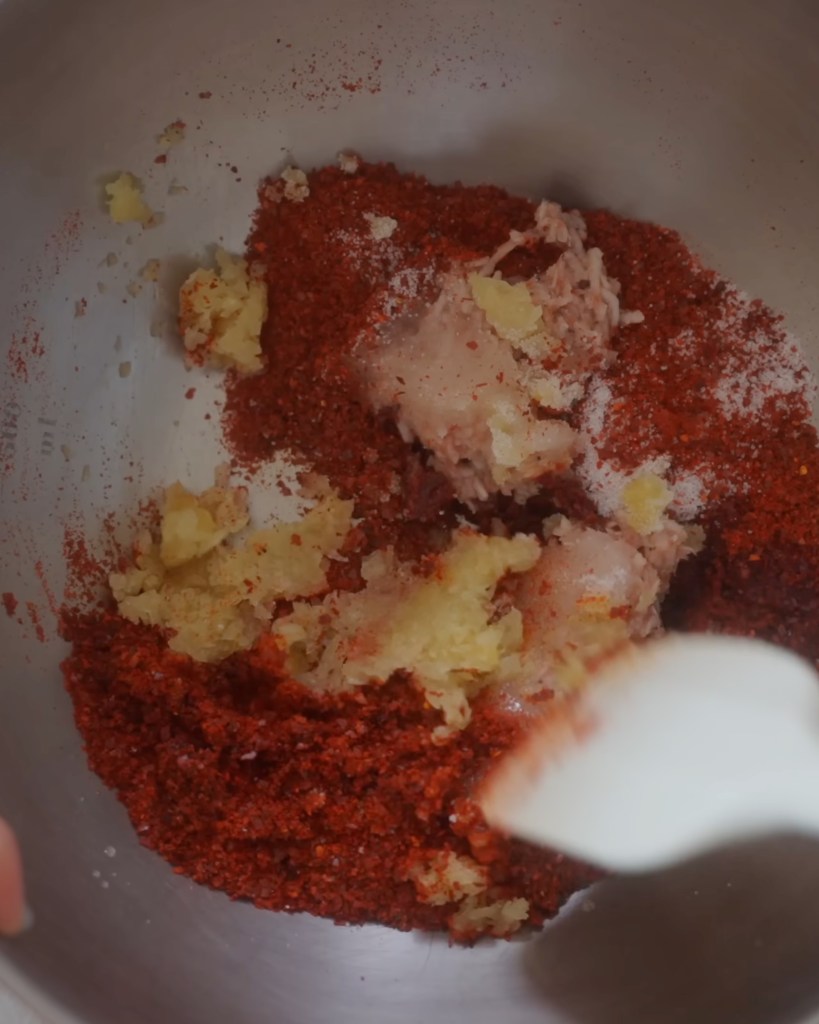
- In a medium bowl, thoroughly mix all ingredients until a uniform, thick paste is formed. This is your general kimchi seasoning base.
Kkakdugi (Diced Radish Kimchi)
Ingredients:
- 4 cups radish, peeled and diced into 1.5cm cubes
- For Brining: 2 Tbsp salt, 2 Tbsp sugar
- For Glutinous Rice Paste: 1/4 cup water, 1 Tbsp glutinous rice flour
- For Seasoning Paste:
- 1/4 apple, cored
- 1/2 onion
- 2.5 red chilies (fresh, if possible, or dried rehydrated)
- 6 cloves garlic
- 1 Tbsp saeu-jeot (salted fermented shrimp)
- 1 tsp minced ginger
- 1/4 cup gochugaru (Korean chili powder)
- 1 Tbsp fish sauce
- 1 cup green onions, cut into 5cm lengths


Directions:
- Brine the Radish: Place the diced radish in a large bowl. Sprinkle with 2 Tbsp salt and 2 Tbsp sugar. Toss well and let it brine for 30 minutes. This draws out excess moisture and seasons the radish.
- Make Glutinous Rice Paste: In a small microwave-safe bowl, whisk together 1/4 cup water and 1 Tbsp glutinous rice flour until smooth. Microwave for 1 minute, stirring halfway through, until it thickens into a paste. Let it cool.
- Prepare Seasoning Paste: In a blender or food processor, combine the apple, onion, red chilies, garlic, saeu-jeot, and minced ginger. Blend until a smooth paste forms.
- Combine Kimchi Seasoning: In a large mixing bowl, combine the blended seasoning paste, the cooled glutinous rice paste, 1/4 cup gochugaru, and 1 Tbsp fish sauce. Mix everything thoroughly until well combined.
- Mix with Radish: After 30 minutes, drain any accumulated water from the brined radish. Add the drained radish and the 5cm-long green onions to the bowl with the kimchi seasoning.
- Using clean hands (wearing gloves is recommended), thoroughly mix and massage the seasoning into the radish and green onions until everything is evenly coated.
- Transfer the kkakdugi to a clean, airtight container. Press it down firmly to remove air pockets.
- Cover the container and let it ferment at room temperature for about one day. After this initial fermentation, transfer to the refrigerator for further aging and storage.
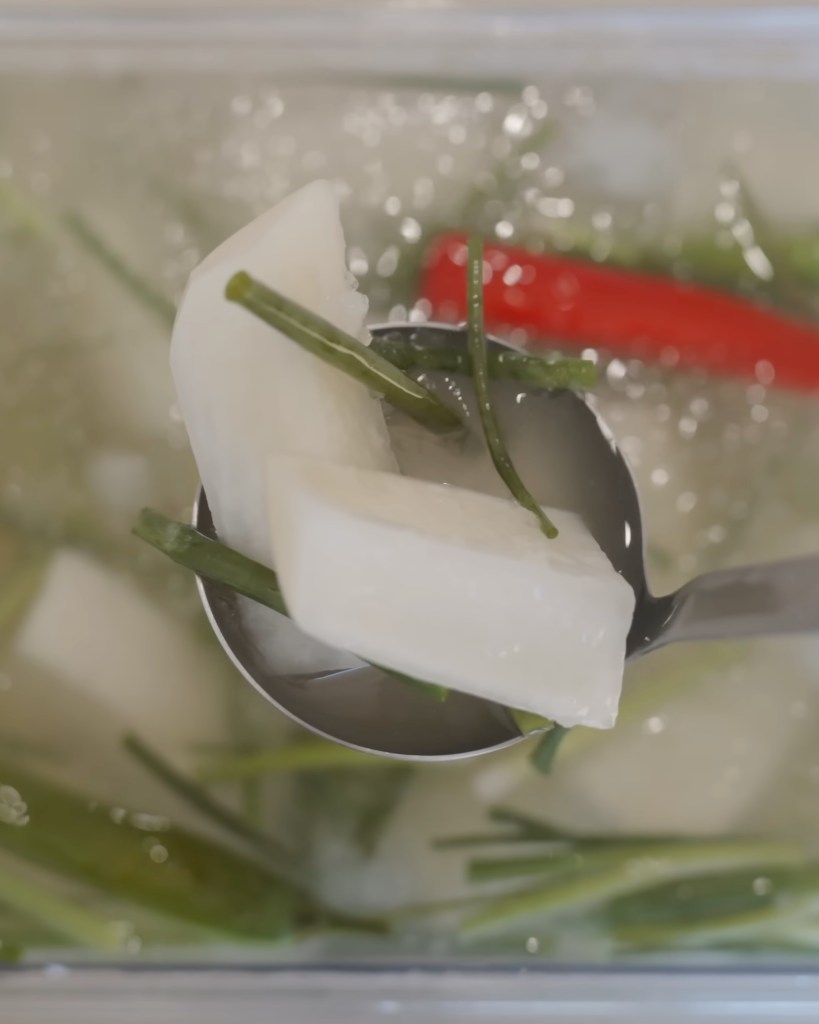
Dongchimi (Radish Water Kimchi)
Ingredients:
- 1/2 radish, cut into appropriate sizes (e.g., thick slices or chunks)
- 2 Tbsp salt
- 1 cup green onions, cut into 5cm lengths
- 1 red chili, 1 green chili (poked with a fork)
- 6 cups water
- Large plastic bag
- Airtight container

Directions:
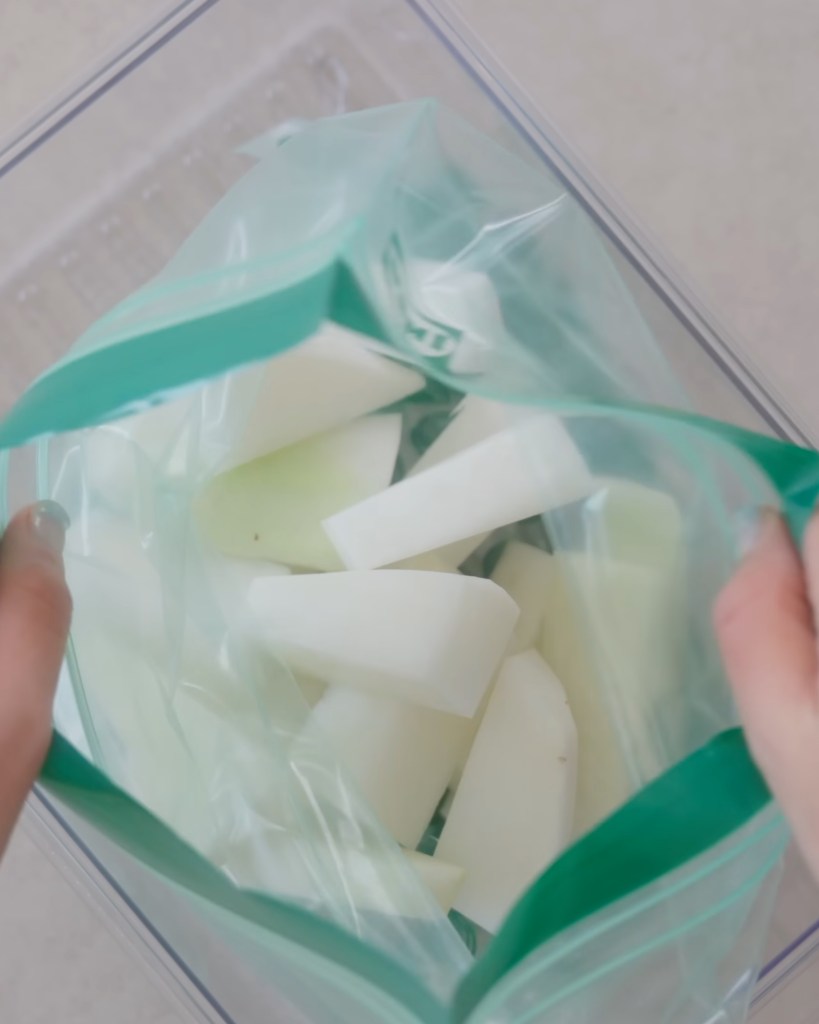
- Place the cut radish in a large plastic bag. Sprinkle with 2 Tbsp salt and gently massage to coat. Let it brine for 20 minutes.
- Add the 5cm-long green onions and the red and green chilies (poked with a fork to release flavor) into the bag with the radish.
- Pour 6 cups of water into the bag.
- Remove as much air as possible from the plastic bag and seal it tightly. Place the sealed bag into an airtight container.
- Cover the container and let it ferment at room temperature for 2 days.
- After 2 days, transfer the container to the refrigerator. Allow it to ferment for an additional 2 days in the refrigerator before serving.
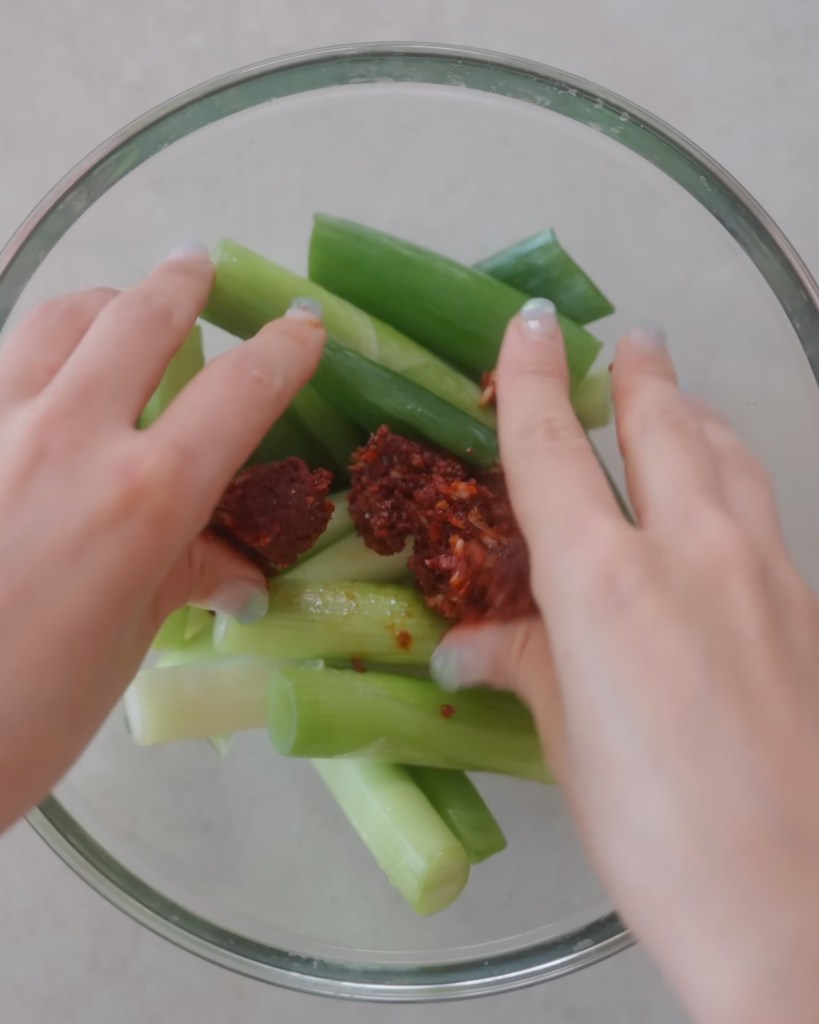
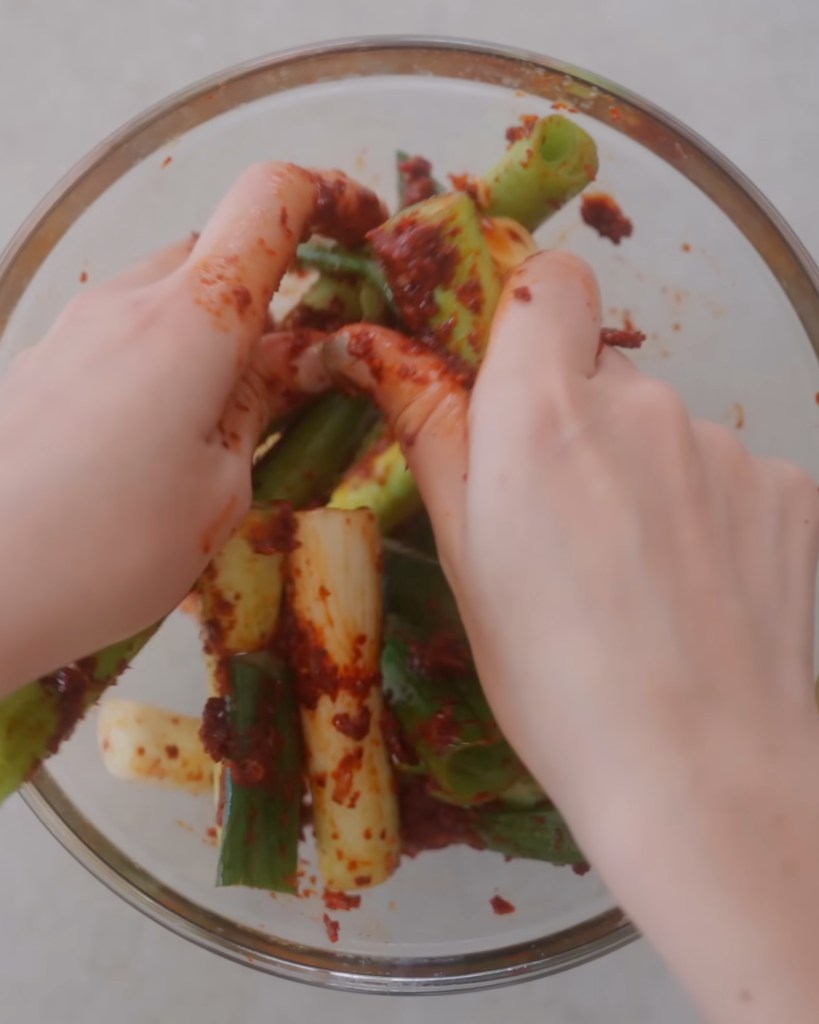
Daepa Kimchi (Leek Kimchi)
Ingredients:
- 2 large leeks, cut into 10cm lengths
- 2 Tbsp fish sauce
- 1/4 cup Kimchi Seasoning (prepared as above)

Directions:
- Cut the leeks into 10cm (approx. 4-inch) lengths.
- Place the cut leeks in a bowl and add 2 Tbsp of fish sauce. Toss gently to coat and let them marinate for 10 minutes. Do not drain the fish sauce.
- Add 1/4 cup of the prepared Kimchi Seasoning directly to the bowl with the leeks and fish sauce.
- Gently mix and massage the seasoning into the leeks until they are well coated.
- Transfer to a container and store in the refrigerator. Can be eaten immediately or after a day or two for more fermentation.
Jjokpa Kimchi (Green Onion Kimchi)
Ingredients:
- 10 bunches of green onions (scallions)
- 2 Tbsp fish sauce
- 1/4 cup Kimchi Seasoning (prepared as above)


Directions:
- Clean the green onions. For this kimchi, you'll mainly brine and season the thicker white bulb ends.
- Place the green onions in a bowl, focusing the 2 Tbsp of fish sauce primarily on the white bulb parts. Let them marinate for 10 minutes. Do not drain the fish sauce.
- Add 1/4 cup of the prepared Kimchi Seasoning to the bowl.
- Gently mix and massage the seasoning into the green onions until they are well coated.
- Transfer to a container and store in the refrigerator. Can be eaten immediately or after a day or two for more fermentation.
Buchu Kimchi (Chive Kimchi)
Ingredients:
- 1 bunch of chives
- 1/4 cup Kimchi Seasoning (prepared as above)
- 2 Tbsp fish sauce


Directions:
- Wash and dry the chives. Cut them into 5-7cm lengths if they are very long.
- In a mixing bowl, combine the chives, 1/4 cup of the prepared Kimchi Seasoning, and 2 Tbsp of fish sauce.
- Gently toss and mix the chives with the seasoning until everything is well coated. Be careful not to bruise the chives too much.
- Transfer to a container and store in the refrigerator. This kimchi is best eaten fresh.
Yangpa Kimchi (Onion Kimchi)
Ingredients:
- Peeled onions (medium-sized)
- 4 cups water
- 1 Tbsp salt
- Kimchi Seasoning (prepared as above)


Directions:
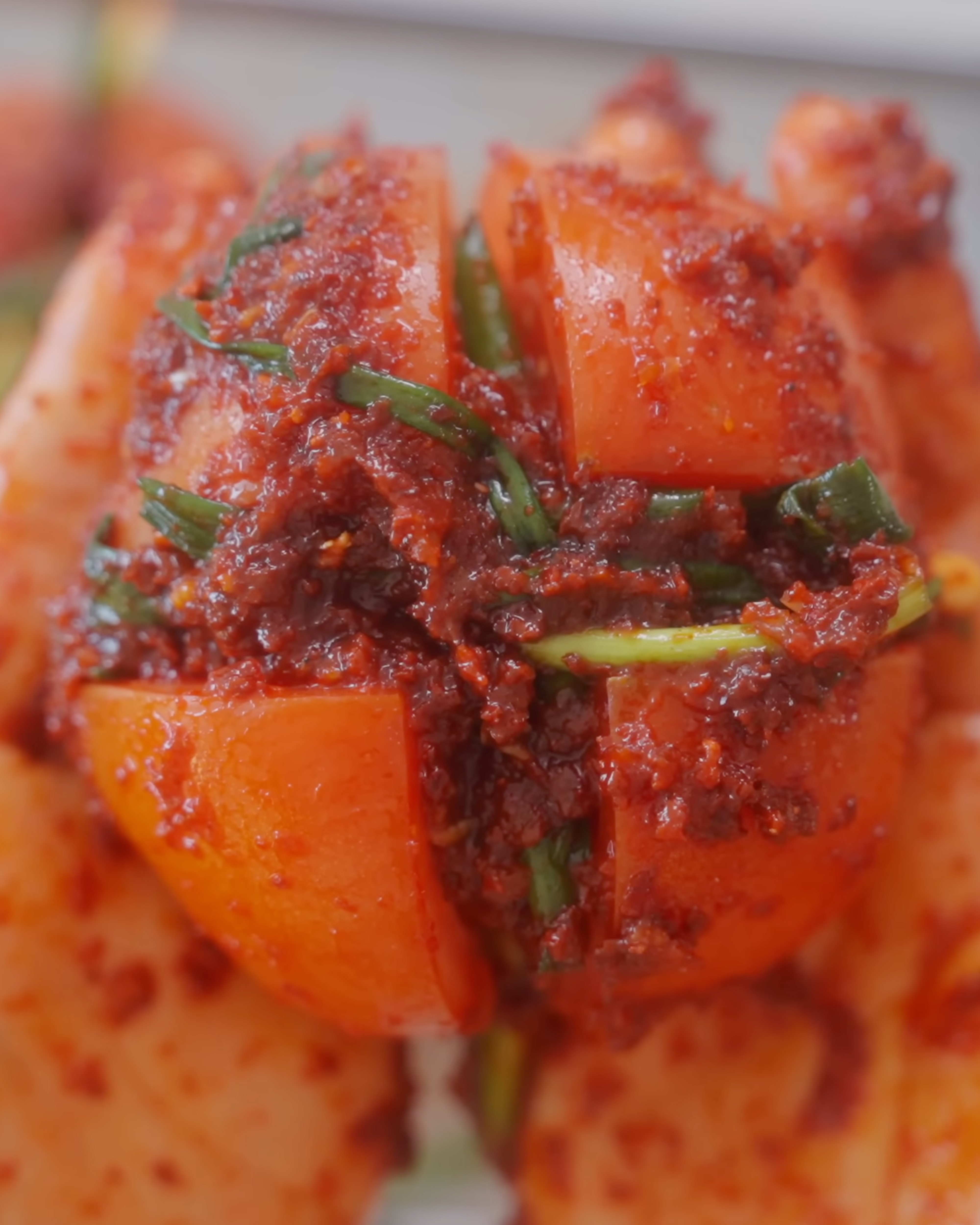
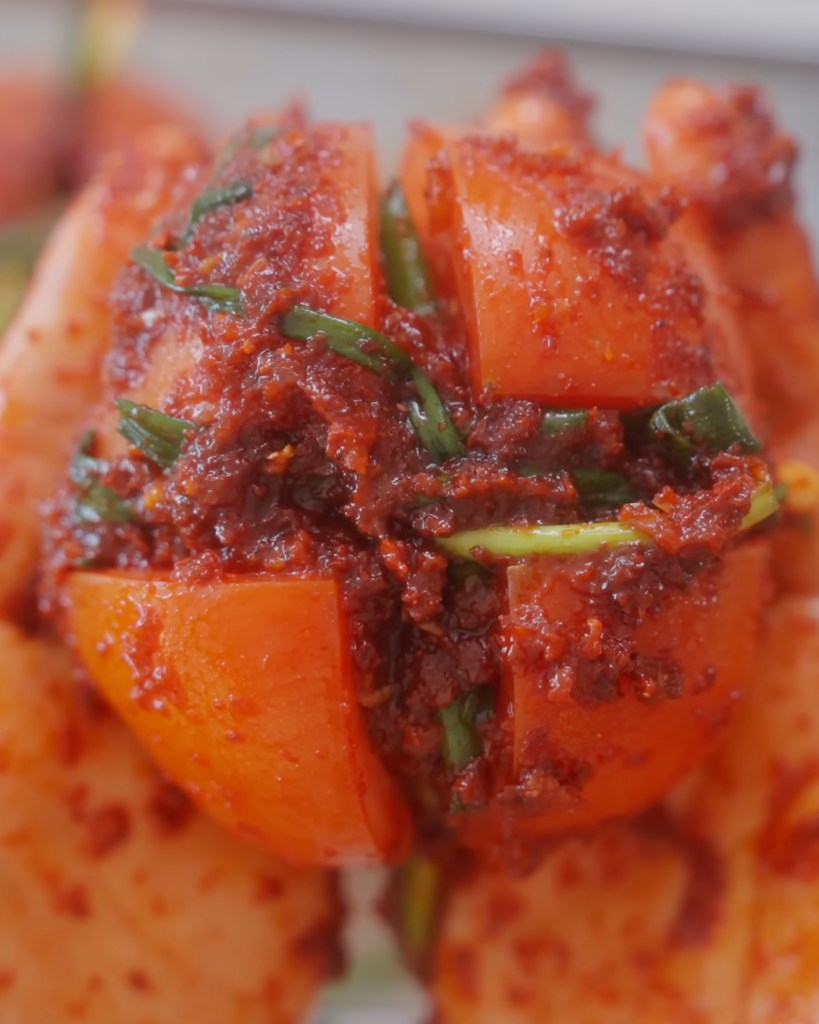
- Peel the onions. Make vertical cuts into each onion, starting from the top and going about 3/4 of the way down, creating slits but keeping the base intact. Gently fan out the layers.
- In a bowl, dissolve 1 Tbsp salt in 4 cups of water to create a brine.
- Place the prepared onions into the brine and let them soak for 10 minutes. This helps to slightly soften and season the onions.
- Remove the onions from the brine and gently shake off excess water.
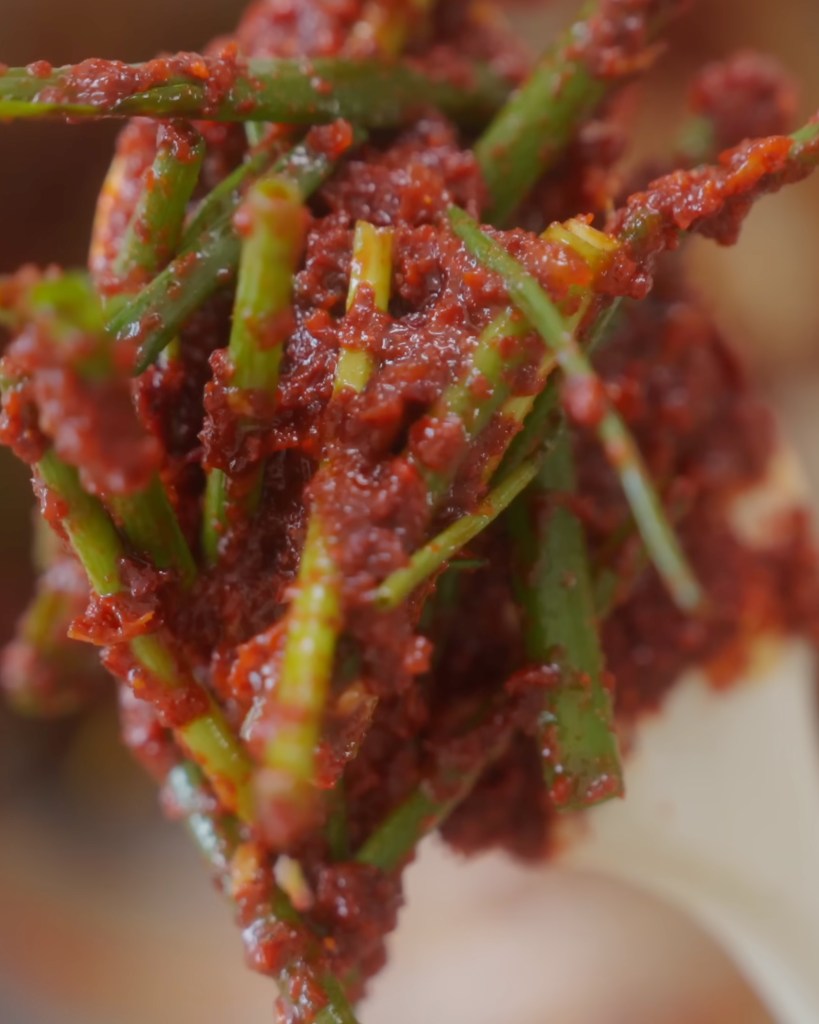
- Carefully apply the prepared Kimchi Seasoning into each slit and layer of the fanned-out onions, ensuring an even coating.
- Transfer to a container and store in the refrigerator.
Tomato Kimchi
Ingredients:
- Tomatoes
- 4 cups water
- 1 Tbsp salt
- Kimchi Seasoning (prepared as above)
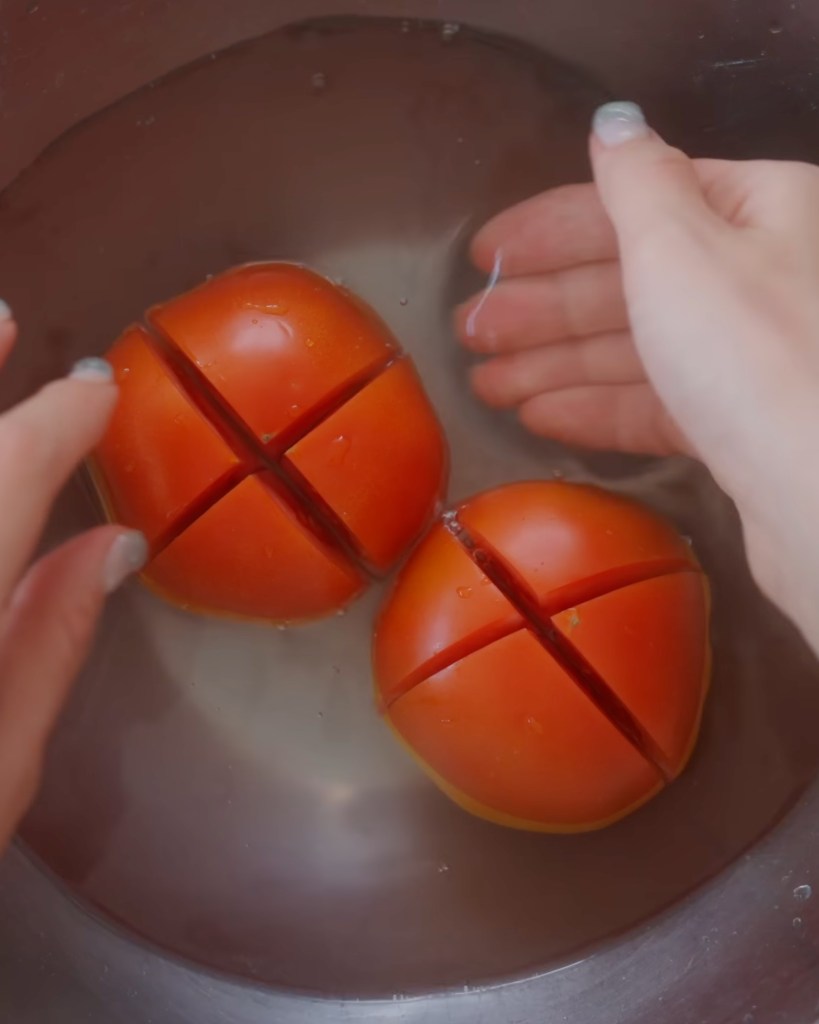


Directions:
- Prepare tomatoes in the same way as the onions for Yangpa Kimchi: make vertical cuts from the top down, about 3/4 of the way, keeping the base intact.
- Brine the prepared tomatoes in the same saltwater solution (4 cups water with 1 Tbsp salt) for 10 minutes.
- Remove the tomatoes from the brine and gently shake off excess water.
- Carefully apply the prepared Kimchi Seasoning into the cuts and layers of the tomatoes, ensuring an even coating.
- Transfer to a container and store in the refrigerator.
Kkaetnip Kimchi (Perilla Leaf Kimchi)
Ingredients:
- Fresh perilla leaves
- Kimchi Seasoning (prepared as above)
- Water
- Minced onion
- Minced green onion
- Sesame seeds
- Sesame oil

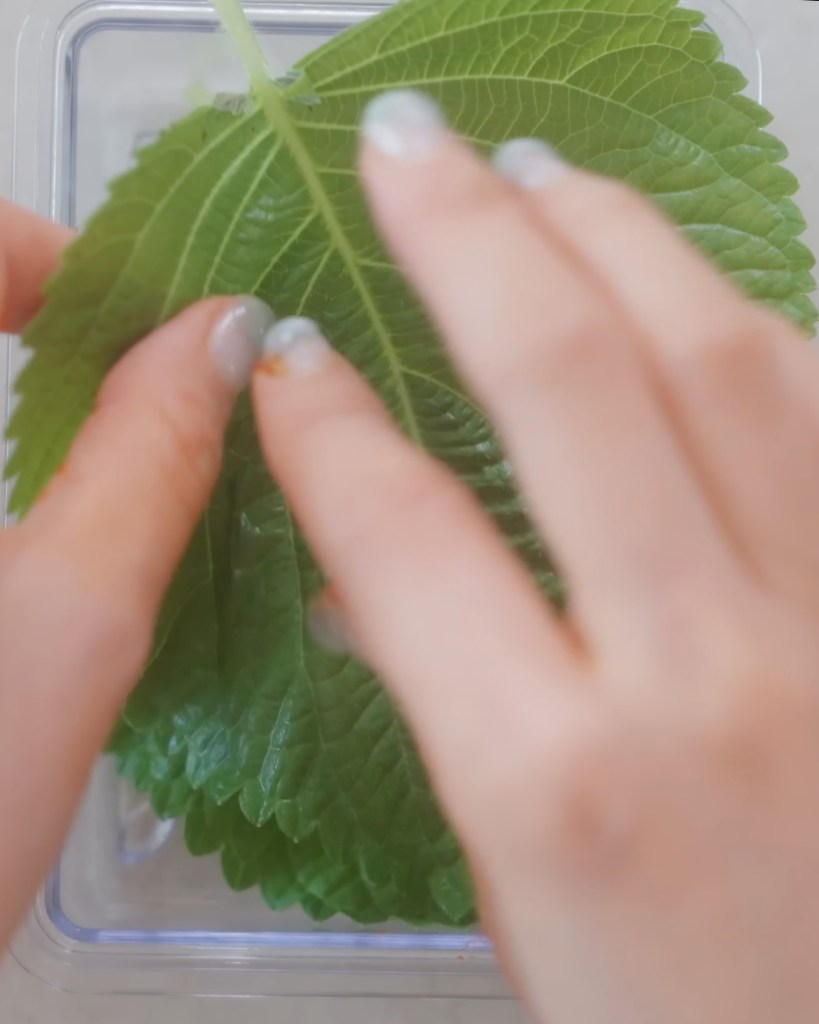
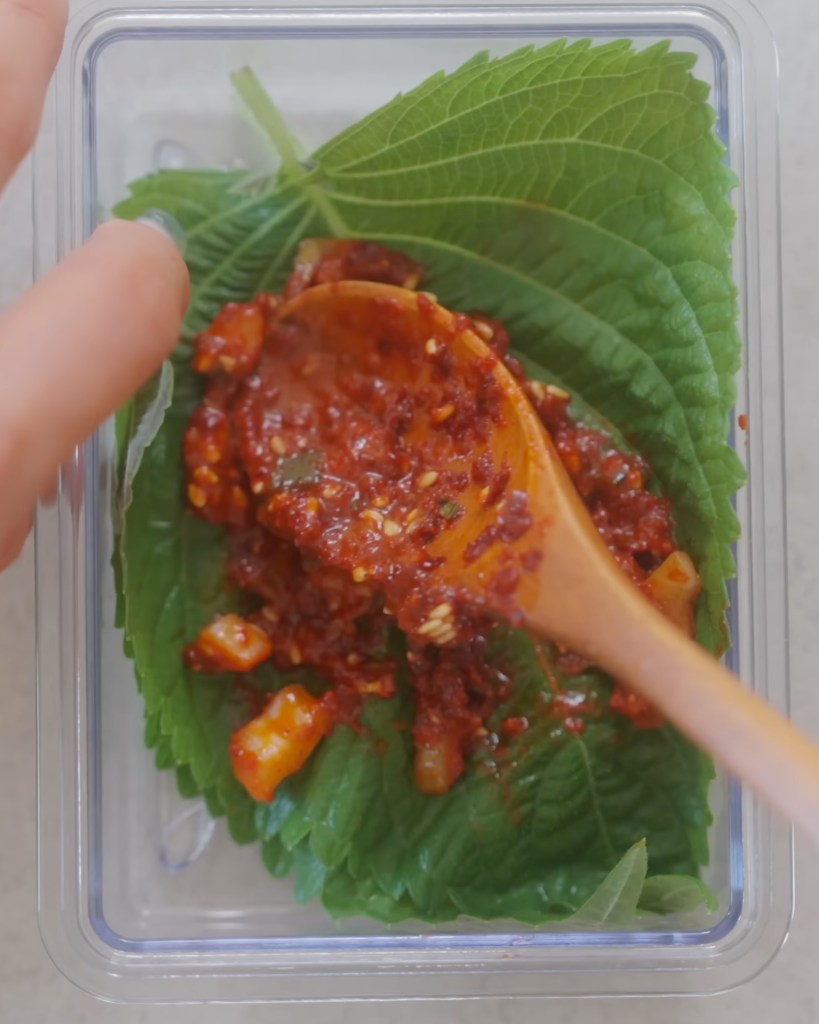
Directions:
- In a bowl, combine Kimchi Seasoning and water in a 2:1 ratio (e.g., 2 parts kimchi seasoning to 1 part water).
- To this mixture, add minced onion, minced green onion, sesame seeds, and a drizzle of sesame oil. Mix well to create the perilla leaf kimchi sauce.
- Thoroughly wash and dry the perilla leaves.
- Take one perilla leaf at a time and spread a thin layer of the prepared kimchi sauce evenly over its surface. Stack the seasoned leaves neatly in an airtight container.
- Store in the refrigerator. This kimchi can be eaten immediately.
Kkaetnip Jjim (Steamed Perilla Leaves)
Ingredients:
- Seasoned perilla leaves (prepared as in Recipe 33, Kkaetnip Kimchi)
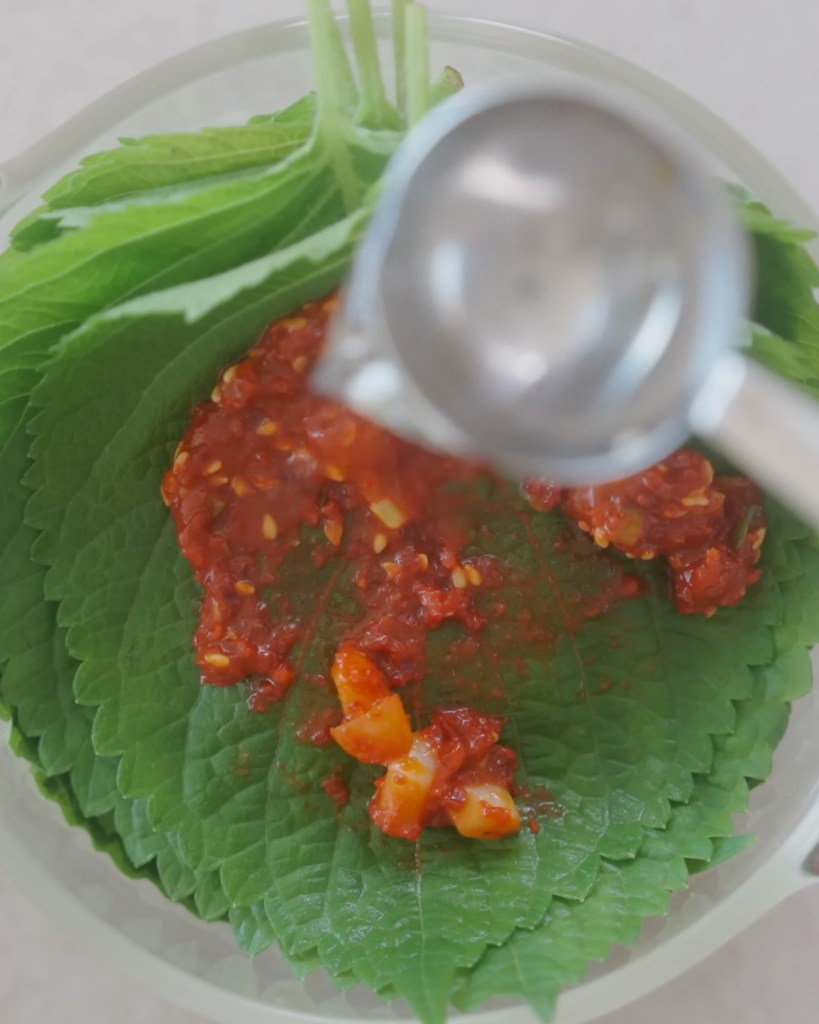

Directions:
- Take a portion of the seasoned perilla leaves (from Recipe 33).
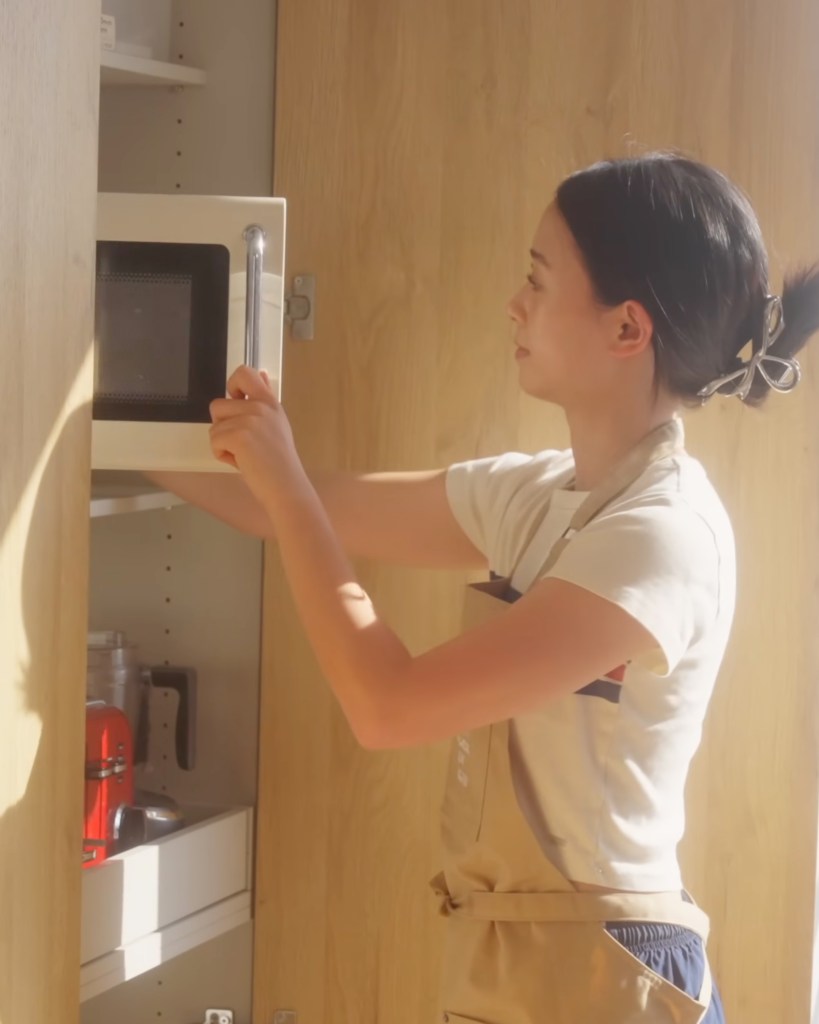
- Place them in a microwave-safe dish.
- Microwave briefly, just for a short burst (e.g., 30 seconds to 1 minute, depending on microwave power), until the leaves become soft and tender, like a quick steam.
- Serve as a warm, soft side dish.
Recent recipes

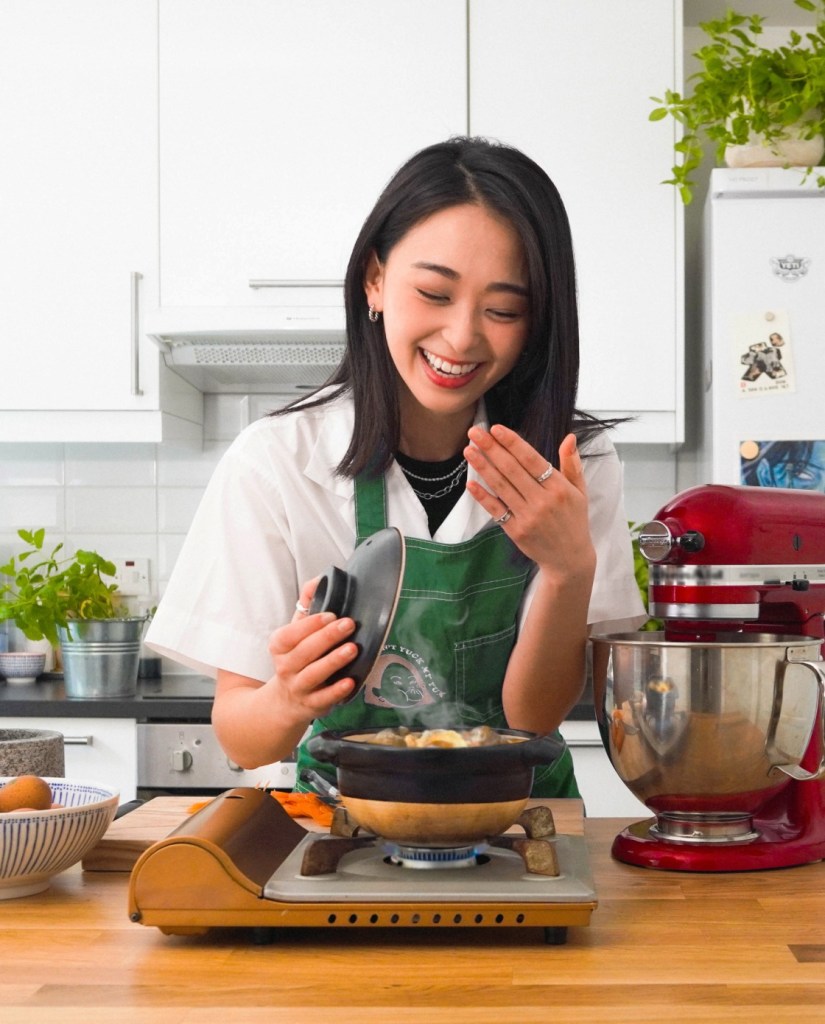
Hi, I’m Tina aka Doobydobap!
Food is my medium to tell stories and connect with people who share the same passion. My recipes are a culmination of my experiences. I hope you enjoy recreating them at home, and if you do, make sure to tag me on Instagram!
Recent recipes
Hey Doobies, thanks for visiting! Join my mailing list for more delicious recipes and stories.

Comments